Sales Funnel Optimization Checklist for Small Businesses
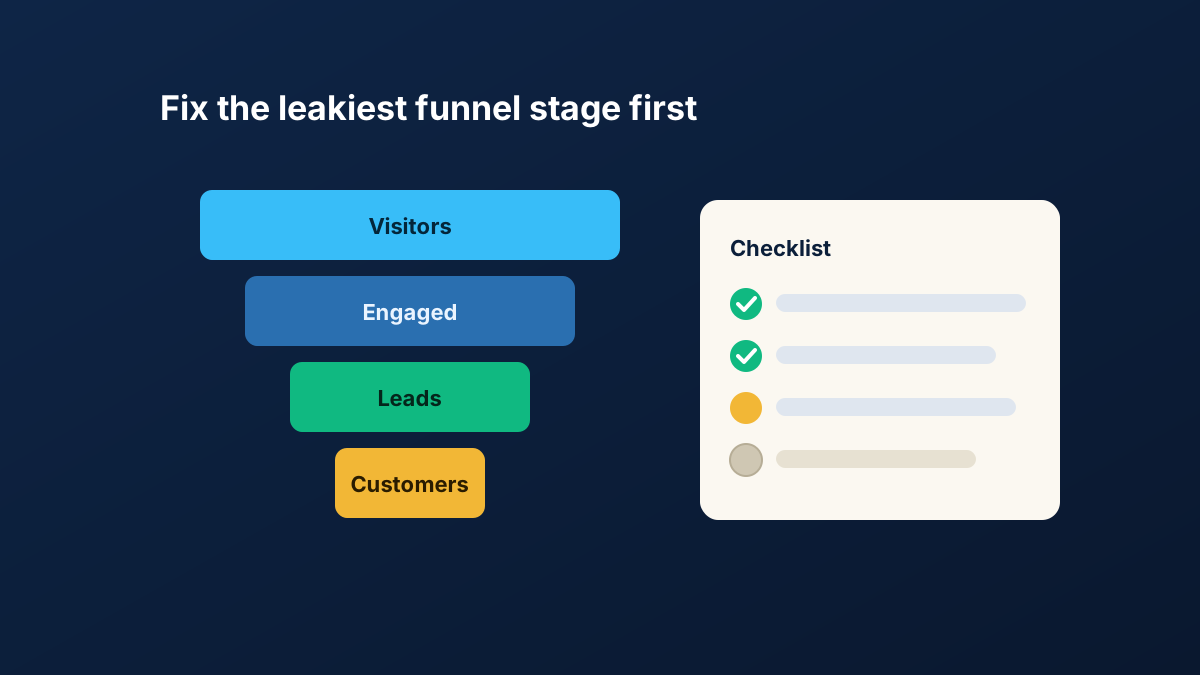
A sales funnel is just the path a stranger takes to becoming a customer — and at every stage, some people fall away. Optimizing the funnel doesn't mean adding complexity. It means finding the stage where you lose the most people and fixing that first, because the biggest drop-off is where the most revenue is hiding.
This is a practical, plain-English checklist you can apply to almost any small or service business. You don't need fancy software — just a willingness to look honestly at each stage and improve the weakest one.
Map your funnel in simple stages
Most small business funnels come down to four stages. Name them in your own words, but the shape is usually the same:
- Visitors — people who find you, online or off.
- Engaged — people who show interest by reading, clicking, or asking.
- Leads — people who enquire, book, or start a purchase.
- Customers — people who buy, and ideally buy again.
If you want the bigger picture of why drop-off matters, see Revenue Leaks Small Businesses Miss.
Find your weakest stage
Before optimizing anything, find where you lose the most people relative to the stage before. You don't need perfect data — even rough counts reveal the worst leak. The stage with the steepest drop-off is almost always where to start.
- Roughly how many visitors do you get in a typical week?
- How many take a clear next step (click, read, ask)?
- How many become leads — enquiries, bookings, or carts?
- How many of those leads actually become customers?
Stage 1 checklist: Visitors → Engaged
- Is it clear within seconds what you offer and for whom?
- Does the page load fast and work well on a phone?
- Is there an obvious reason to keep reading or click further?
Stage 2 checklist: Engaged → Leads
- Is there one clear primary call to action?
- Is the enquiry or booking process short and low-friction?
- Are common buyer questions answered before they're asked?
- Is it easy to take the next step from a phone?
This stage overlaps heavily with conversion — for depth, see How to Improve Website Conversion Rates for More Leads.
Stage 3 checklist: Leads → Customers
- Are new leads contacted quickly, while interest is high?
- Is there a follow-up sequence, not just a single attempt?
- Is the offer clear and easy to say yes to at this point?
- Is the final step to buy or book genuinely simple?
A clearer offer helps here — see How to Increase Sales Revenue With Better Offers.
Stage 4 checklist: Customers → Repeat Customers
- Do you stay in touch after the first purchase?
- Is the second purchase easy and inviting?
- Do you ask happy customers for referrals or reviews?
Build this out with Customer Retention Strategies That Grow Repeat Revenue.
Fix one stage, then re-measure
Resist the urge to overhaul everything at once. Improve the weakest stage, give it time, and look again at your rough numbers. Often, fixing the worst leak shifts the bottleneck to a different stage — which becomes your next focus.
Funnel optimization isn't about doing more. It's about repeatedly fixing the single weakest link.
Honest caveat
Funnel numbers vary widely by business and traffic source, and rough estimates are fine to start. The point isn't precise analytics — it's noticing where you lose the most people and improving that. Use judgement and your own results.
Once your funnel is tighter, keep it healthy with a routine — see A Monthly Revenue Growth Plan for Small Business Owners. Want help spotting your weakest stage? Request a free revenue check.
Want a second opinion on your revenue?
Tell us about your business and we'll reply with practical, honest observations — no pressure, no guaranteed-results claims.