Pricing Strategy for Small Business Revenue Growth
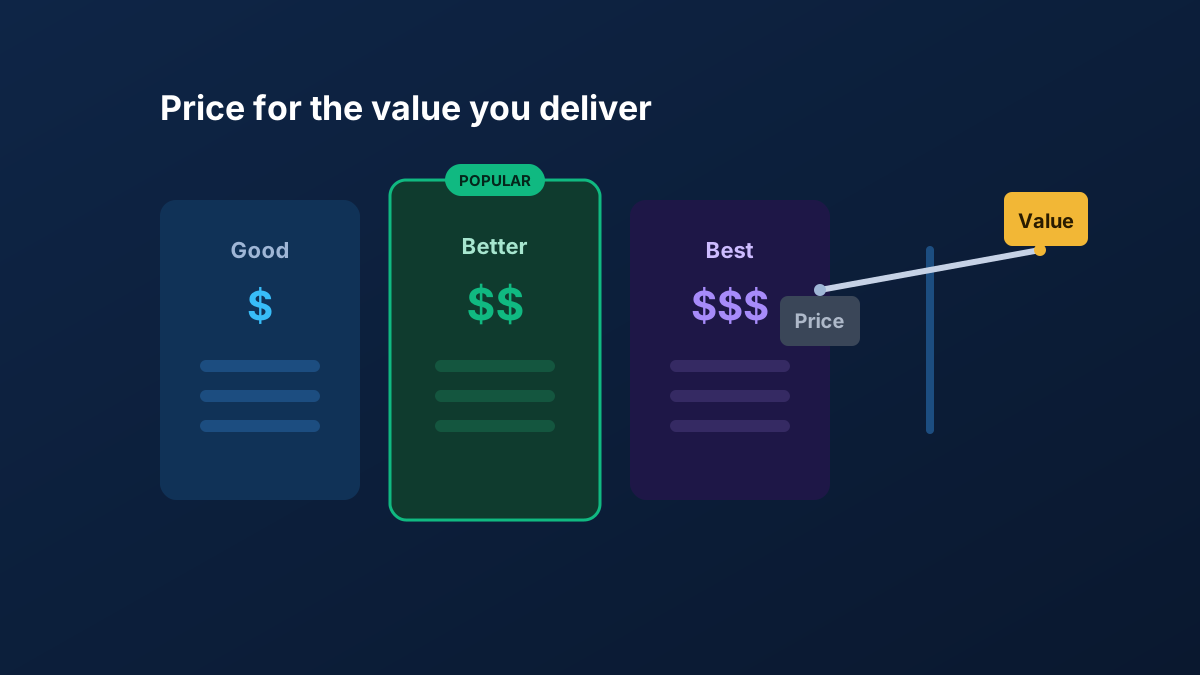
Of all the revenue levers, pricing is the most direct. A change in price flows straight to revenue and, often, even more directly to profit. Yet it's also the lever owners touch least, usually out of fear: fear of losing customers, fear of seeming greedy, fear of getting it wrong.
This guide is a careful, honest look at pricing for small business revenue growth. The goal isn't to charge as much as possible — it's to stop leaving money on the table while keeping the trust of the customers you value.
Why under-pricing is so common
Many small businesses set prices early, when they were unsure of their value, and then never revisited them. Costs rise, skills improve, and demand changes, but the price stays frozen. Under-pricing feels safe, but it's a steady leak: every sale earns less than it could, and very low prices can even signal lower quality.
Anchor pricing to value, not just cost
Cost tells you your floor — the price below which you lose money. But what a customer will happily pay depends on the value they get, not your costs. The more clearly you can connect your price to a real outcome the customer cares about, the more room you have to price fairly.
- Know your true costs so you never price below your floor.
- Describe the outcome and value, not just the hours or materials.
- Remember that the cheapest option is rarely the most trusted.
Use tiers to give customers a choice of yes
A single take-it-or-leave-it price forces a yes-or-no decision. A small set of tiers changes the question from 'should I buy?' to 'which option is right for me?' Done honestly, tiers also let customers who want more pay more, lifting your average sale.
- Offer a clear good, better, best — without overwhelming choice.
- Make the differences between tiers easy to understand.
- Ensure each tier is genuinely worth its price, not padded.
Improve price the careful way
Pricing is sensitive, so change it deliberately rather than abruptly. Modest, well-communicated improvements are usually absorbed far better than people fear, especially when paired with clear value. Sudden, large, unexplained jumps are what damage trust.
- Start with new customers or new offers, where there's no existing expectation.
- Make small, justified adjustments rather than dramatic ones.
- Explain what's included and why, so the price feels fair.
- Give existing loyal customers notice and, where reasonable, a transition.
Communicate, don't apologise
When you raise a price, state it plainly and focus on the value provided. Over-apologising signals that even you don't think it's worth it. Confidence and clarity reassure customers more than discounts do.
Be wary of discounting as a habit
Discounts can move stock or win a hesitant buyer, but as a routine they're corrosive. They train customers to wait for the next sale, erode margin, and can make your regular price feel like the 'fake' one. Where you can, add value instead of cutting price.
This connects closely to your offer — see How to Increase Sales Revenue With Better Offers.
Watch what happens, not just what you fear
The only way to know how a price change lands is to make it carefully and observe. Track whether sales hold, whether the customers you want still buy, and what your revenue and margin do. Let real results, not anxiety, guide your next move.
Honest caveat
Pricing depends heavily on your market, your costs, and your customers. There's no universal right answer, and a change that helps one business can hurt another. Move carefully, test deliberately, and keep what genuinely works for you.
Pricing works best alongside retention and average order value. See Customer Retention Strategies That Grow Repeat Revenue and How to Increase Average Order Value Without Hurting Trust. Want a second opinion before you change anything? Request a free revenue check.
Want a second opinion on your revenue?
Tell us about your business and we'll reply with practical, honest observations — no pressure, no guaranteed-results claims.